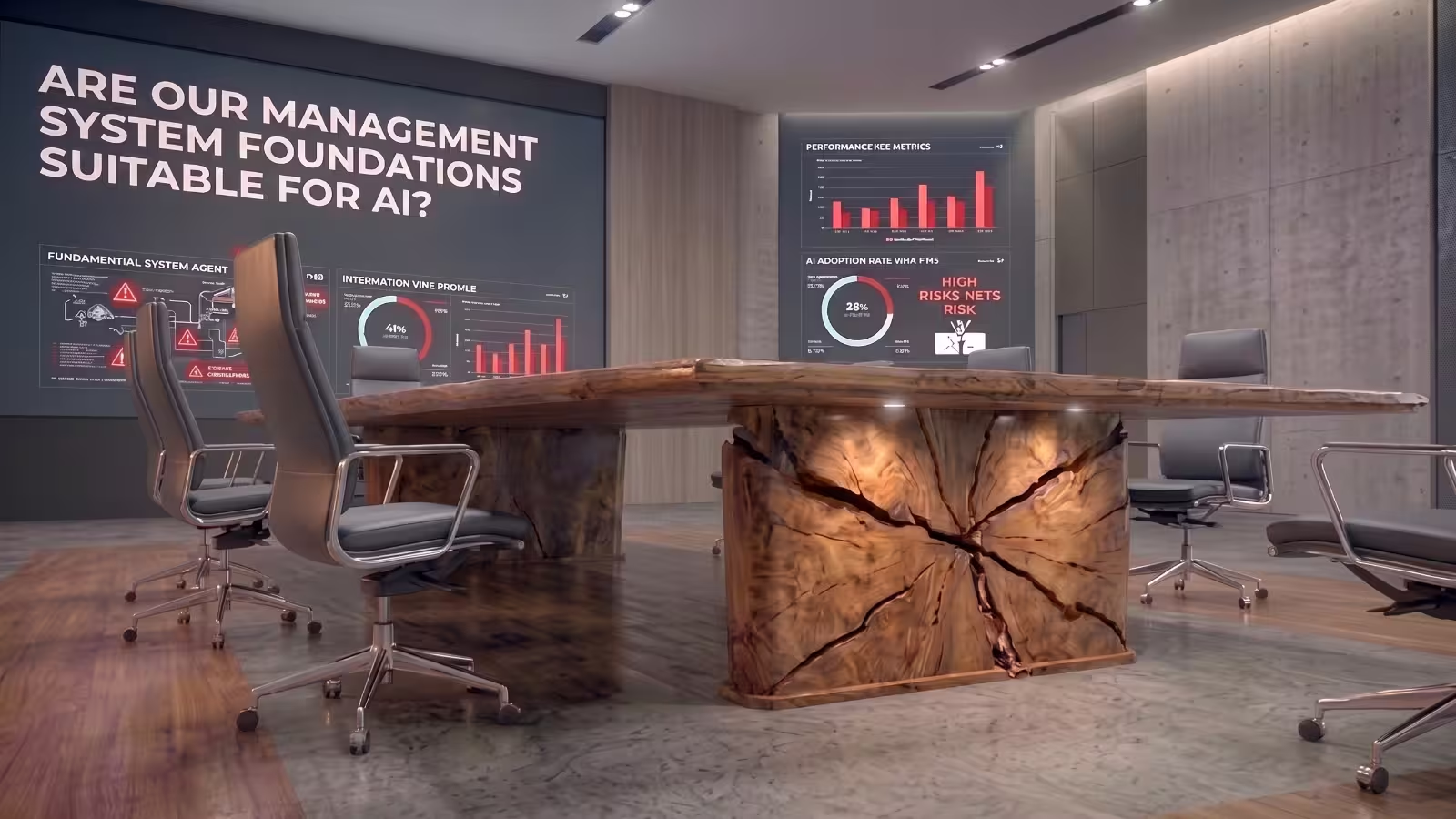

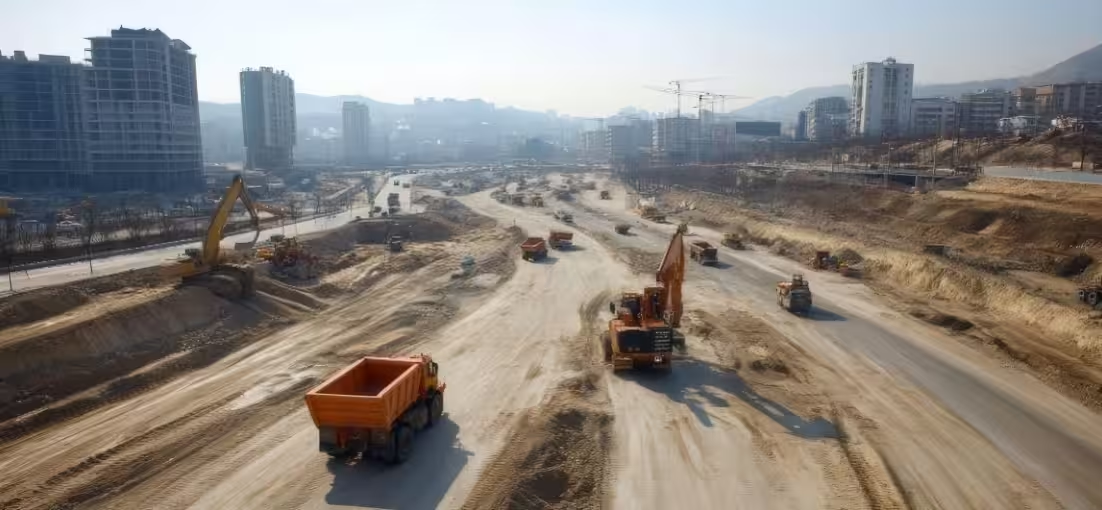
For decades, the Stage-Gate model – a sequential process that uses formal decision points (gates) to assess project viability – has been the basis of project management in infrastructure programs. As market volatility and technological change have increased, however, many leaders are questioning whether the fixed, linear Stage-Gate approach is still the best way forward.
Agile methodology – born from the dynamic world of software – promises flexibility, rapid adaptation, and continuous value delivery. That said, the question infrastructure projects are asking isn't whether they should use, but how they can use the strengths of both to deliver certainty and value in an unpredictable world.
In this article, we're going to answer that question.
Key takeaways
The Stage-Gate process provides essential financial control and Go/Kill governance necessary for high-risk, capital-intensive infrastructure investments.
Pure Agile is unsuitable for physical infrastructure due to the prohibitively high cost of late-stage design and physical changes.
The Agile-Stage-Gate Hybrid is the recommended model, delivering strategic control (gates) while allowing a degree of tactical flexibility (sprints).
Stage-Gate manages the Macro-Strategy and Investment, while Agile manages the Micro-Execution and Design Detailing within the approved stages.
Success comes from strategically introducing flexibility (Agile) at the execution level while maintaining absolute certainty (Stage-Gate) at the decision and funding gates.
The Structured Foundation of Stage-Gate
The Stage-Gate methodology (also known as Phase-Gate) is a plan-driven, sequential process rooted in the principles of Waterfall management. It's earned its place at the infrastructure table for a compelling reason: it's built for risk and investment mitigation.
Stage-Gate breaks the project lifecycle into distinct stages – such as Ideation, Feasibility, Design, Development, and Launch. As the process is inherently linear, it requires meticulous front-end planning to define the final product and its value at the outset.
The most important component of this methodology is the series of decision gates that follow each stage. These are formal "Go/Kill" points where a steering committee or governance body reviews pre-agreed criteria (including the updated business case, risk profile, and technical performance) to decide whether to "Go", "Recycle" (rework), "Hold", or "Kill" the project entirely.
Its strengths and limitations in high capital projects
For large-scale infrastructure, the Stage-Gate approach offers many advantages:
Efficient risk management: The gates ensure potential risks and capital commitments are thoroughly vetted before major resources are deployed into the next stage, providing a clear mechanism for financial control.
Strategic alignment: The structured milestones and detailed documentation deliver exceptional executive oversight, keeping the project aligned with the organisation's strategic priorities.
Clear accountability: The defined sequence and criteria provide clear progress markers and assigned responsibilities.
However, the rigidity of Stage-Gate is its major vulnerability. Its reliance on defining scope and requirements early makes it difficult and costly to adapt to mid-project changes, shifting regulations or new technologies. This challenge reinforces the principle that the cost of change in physical infrastructure dramatically increases with every stage passed.
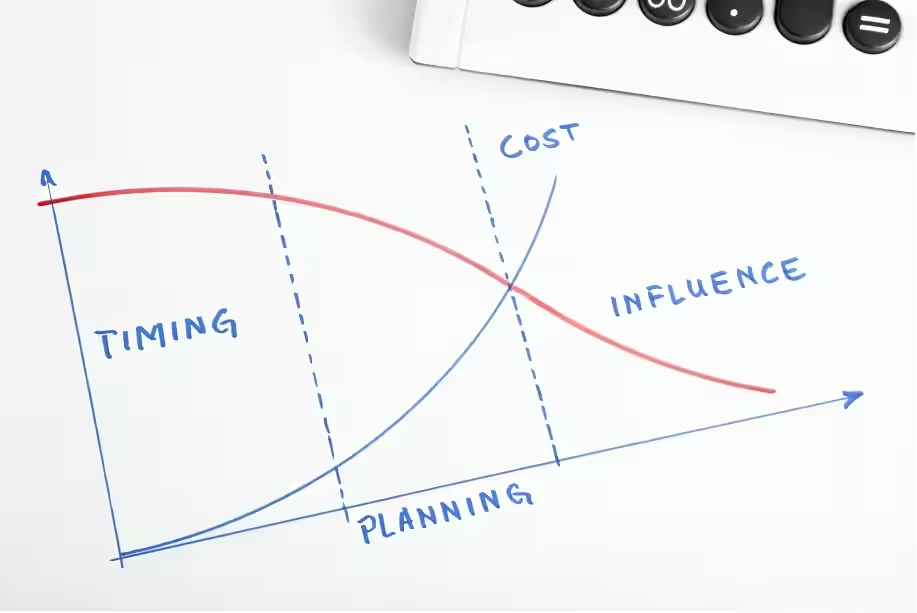
With stakeholder feedback concentrated at the gate reviews, this can mean expensive revisions late in the cycle – a major problem when dealing with physical assets.
The Adaptive Agile Approach
The Agile methodology – encompassing frameworks like Scrum and Kanban – focuses on flexibility and rapid adaptation. While often associated with intangible products like software, its principles offer a powerful counterpoint to Stage-Gate's rigidity.
Agile thrives in environments with evolving requirements, prioritising responsiveness to change over following a fixed plan. Work is organised into short, time-boxed "Sprints" (typically two to four weeks long) designed to deliver a functional increment or working deliverable.
Agile's characteristics include:
Iterative planning: Agile requires minimal up-front planning, allowing detailed requirements to emerge iteratively as the project progresses.
Continuous feedback: It emphasises continuous customer/user involvement and early/frequent feedback loops after each sprint, accelerating learning and reducing the risk of building the wrong product.
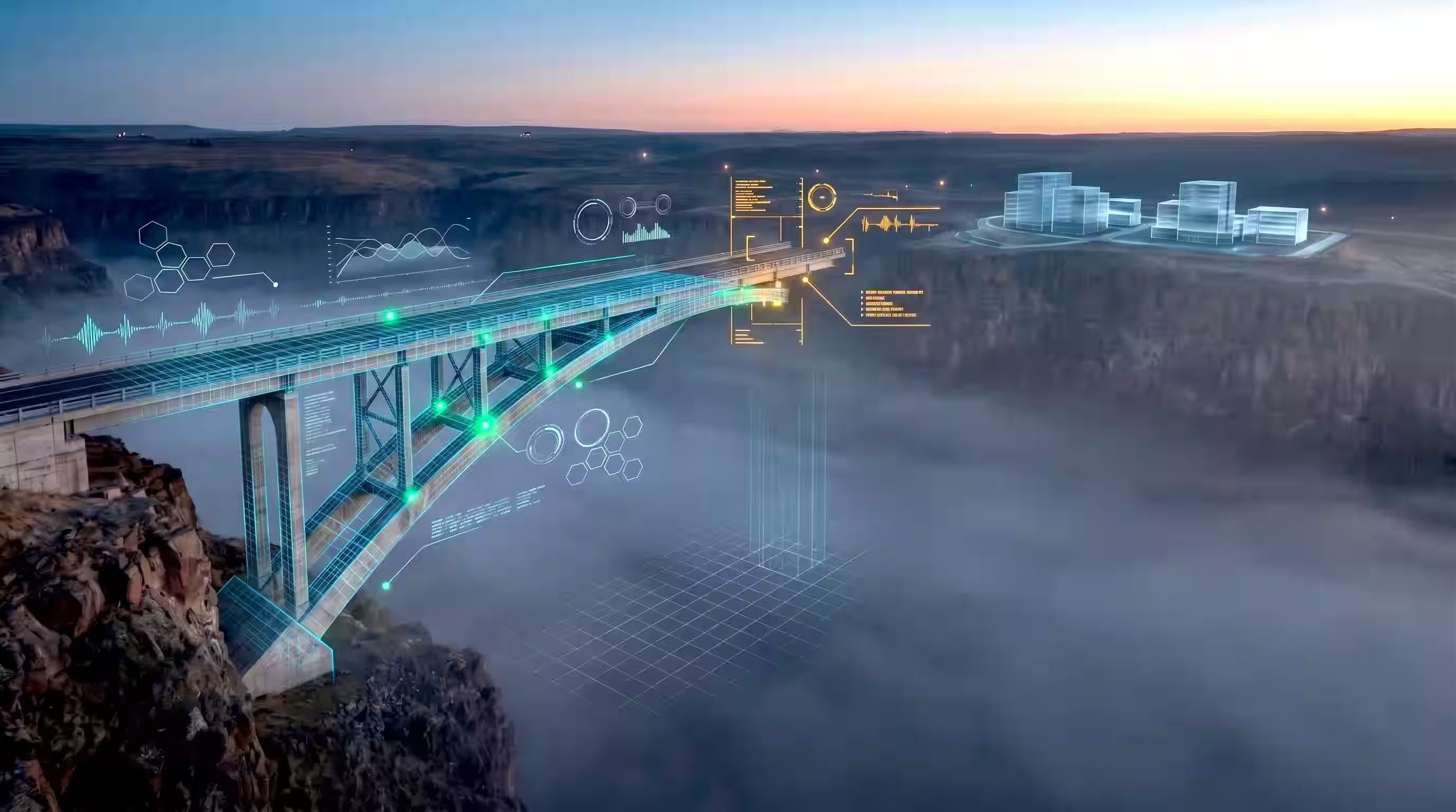
As dynamic as Agile may be, there's a big difference between changing lines of code midway through a software build and changing a concrete bridge midway through its construction. The high cost of change in infrastructure projects is the main obstacle when it comes to applying Agile methodology. What's more, the long lead times for physical components often demand detailed, locked-down specifications far earlier than an Agile approach might tolerate.
Agile's focus on flexibility can also lead to an uncertain schedule and potential scope creep if not managed by sturdy governance, making it a risky proposition for multi-billion-dollar capital projects.
The Agile Stage-Gate Hybrid Model
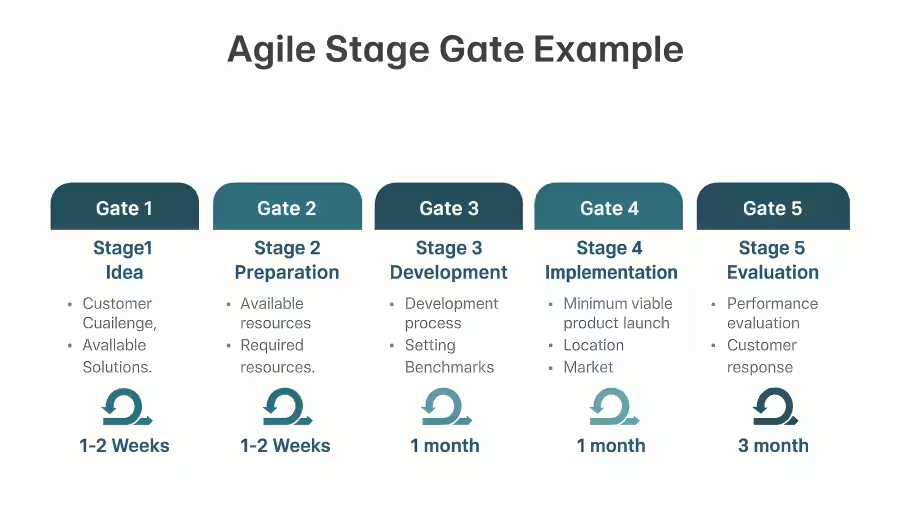
For complex infrastructure programs, the most effective way forward is a combination of both – an integrated approach that merges the structure and governance of Stage-Gate with the tactical flexibility and speed of Agile execution.
This creates a two-tiered management system:
1. Stage-Gate for Macro-Governance
The traditional gates continue to serve as the essential "Go/Kill" risk management framework, controlling major investment decisions, maintaining regulatory compliance and confirming alignment with the organisational strategy. This preserves the necessary financial and risk control needed for capital-intensive projects.
2. Agile for Micro-Execution
Agile sprints and practices (such as Scrum) are embedded within the approved stages, particularly during the Design, Engineering, and Development phases, where requirements are being detailed.
This application of Progressive Elaboration (Rolling Wave Planning) allows teams to:
Design iteratively: Use short, fast-paced iterations to explore design alternatives, build models, and integrate complex systems.
Accelerate feedback: Quickly test and gather input on smaller components or technical requirements, reducing the risk of discovering major flaws during final integration.
Manage change: Incorporate necessary adjustments to detailed requirements without triggering a full re-do of a major Stage-Gate deliverable, preserving schedule and budget integrity.
This combination mitigates the late-stage rigidity of pure Stage-Gate and the governance issues of pure Agile. It allows an organisation to manage its portfolio strategically while executing complex work packages with maximum speed and responsiveness.
How PDAS Can Help

Project Delivery & Assurance Services (PDAS) was founded on the fundamental principle that experience matters. We don't just understand Stage-Gate and Agile – we specialise in integrating them through governance, assurance, and verification, delivering large-scale project outcomes with dramatically minimised risk.
Our approach is deeply collaborative. We act as an extension of your team, aligning our depth industry experience directly with your specific goals. Since no single methodology can deliver project certainty, we partner with you to engineer a custom delivery framework that precisely matches your project's unique scale, complexity and risk profile.
Integrating powerful risk assurance and performance optimisation, we allow your organisation to maintain strategic control over your key capital investments while simultaneously delivering the operational flexibility needed for successful delivery.
Contact us today and bring the best of both methodologies to your infrastructure projects.