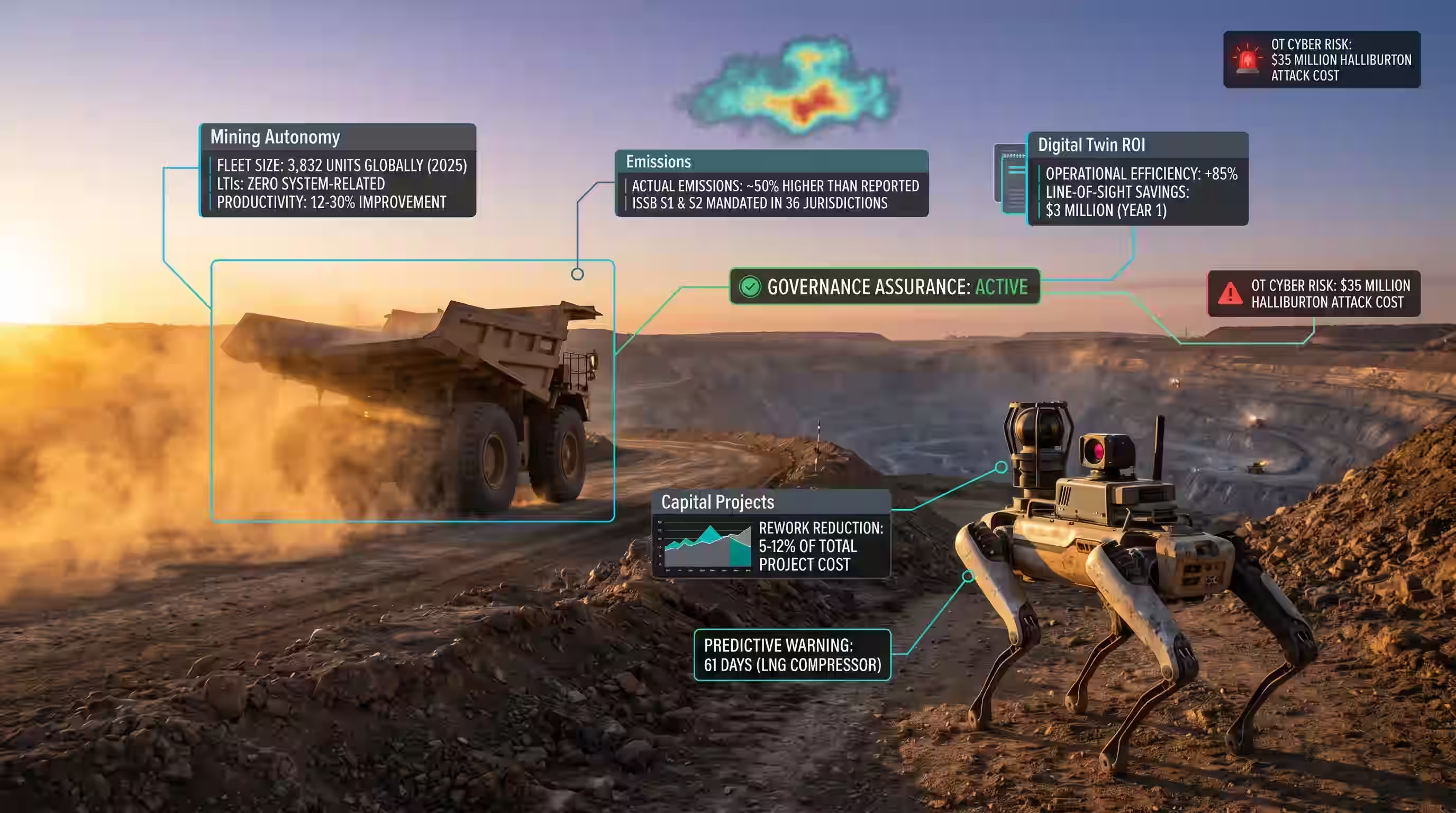


In the long list of operational and regulatory changes that have impacted the energy sector in recent years, the demise of "check-the-box" audits may not be the most dramatic, but it's hugely relevant, nonetheless.
For organisations overseeing multi-billion-dollar capital projects or life-extension programmes for ageing assets, the objective of an audit has changed. Instead of being an autopsy of past errors, it's now a forward-looking instrument for value preservation. With industry leaders moving beyond a compliance-only mindset and adopting audits as a tool for strategic oversight, we're going to look at five key trends currently redefining operational audits in the energy sector.
Key Takeaways
- Predictive over reactive: Audits are shifting toward real-time monitoring and AI-driven "Agentic" systems to prevent failures before they occur.
- ESG is central: Non-financial reporting (carbon intensity, social licence) is now a core component of the audit arena.
- The birth of the digital twin: Virtual replicas of physical assets are allowing continuous, remote auditing without the need for high-risk site visits.
- Cyber-physical convergence: Operational technology (OT) security is now prioritised alongside IT, as hackers increasingly target energy grids.
- Collaborative assurance: Firms are moving toward "Integrated Assurance" models where auditors and project teams work in lockstep.
How Is AI Changing Operational Auditing?
Perhaps the most significant shift is the transition from periodic to continuous auditing. Historically, an operational audit was a snapshot in time. Today, the integration of AI and Machine Learning allows for "Agentic" systems that monitor energy consumption, equipment health and safety protocols around the clock.
Instead of waiting for an annual review to find out that a subsea pump was underperforming, AI-powered audit tools identify pattern deviations in real-time. This trend toward predictive maintenance auditing allows organisations to address issues instantly, significantly reducing downtime and the risk of mechanical failure - a capability increasingly enabled by advanced operational technology tools.
What Are Digital Twins And How Do They Enable Remote Auditing?
Site visits may be costly in terms of time and money, but in the EMR sector, they can also be dangerous. One of the most impactful trends is the use of Digital Twins - highly accurate virtual models of physical assets like refineries, wind farms or mines.
Digital Twins enable three critical audit capabilities:
- Streaming data from IoT sensors into a Digital Twin allows auditors to verify operational status, safety compliance and structural integrity from thousands of miles away.
- Remote auditing capability not only cuts travel costs and carbon footprints but provides more frequent and detailed inspections of hard-to-reach infrastructure, such as offshore platforms or mining equipment.
- Continuous monitoring replaces periodic site visits, enabling proactive intervention before issues escalate - supporting business certainty strategies.
Why Is ESG Now A Core Audit Metric?

With the full implementation of the Corporate Sustainability Reporting Directive (CSRD) and similar global standards, ESG is no longer just a noble pursuit. Modern operational audits in the energy sector now place equal weight on environmental and social stewardship.
Auditors are now tasked with verifying three critical ESG elements:
- Carbon intensity: Accurate tracking of Scope 1, 2, and 3 emissions - essential for energy sector compliance.
- Social licence to operate: Verification of community engagement and fair labour practices in the supply chain.
- Governance integrity: Ensuring that executive decision-making aligns with stated sustainability goals - a key component of stakeholder profitability strategies.
What Is Cyber-OT Security And Why Does It Matter For Audits?
As energy grids and resource infrastructure become increasingly digitised, the attack surface available to cybercriminals has expanded from the corporate office to the industrial frontline. This shift has resulted in the convergence of Information Technology (IT) and Operational Technology (OT) auditing.
While these two domains were traditionally siloed, a breach in a billing system can now potentially provide a gateway to physical systems like turbine regulators. As a result, modern audits now look beyond the standard corporate firewall to scrutinise the integrity of Industrial Control Systems.
A primary focus for risk assurance teams within this is the retrofitting of legacy assets. Because many ageing EMR facilities were built before the era of connectivity, auditors are now tasked with ensuring that new IoT sensors and monitoring devices are integrated without creating fresh vulnerabilities - a challenge addressed through comprehensive risk management strategies.
How Does Integrated Assurance Improve Audit Effectiveness?
The final trend we're going to mention is a cultural one. Historically, the relationship between auditors and project managers has been defined by various degrees of friction, with auditors viewed as external critics arriving after the fact. This adversarial nature is now being replaced with far more productive integrated assurance.
In this collaborative framework, auditors are no longer peripheral observers but are embedded within the project lifecycle - from the initial concept stage-gate through to final operation. This continuous presence allows for real-time course correction, helping teams to identify and mitigate risks before they escalate into systemic failures - an approach that mirrors the principles of project management and assurance integration.
How PDAS Can Help

As the nature of operational audits moves from compliance to value preservation, Project Delivery Assurance Services (PDAS) provides the forward-looking assurance needed to keep energy companies on solid and productive ground. Acting as an independent partner, we deliver practitioner-based expertise - the kind of insights that EMR clients such as TotalEnergies, Shell, and Rio Tinto depend on.
Drawing on a collective 150-year track record, our team installs the rigorous controls and transparent execution models necessary to protect the value of your most critical investments.
Get started with PDAS and move your energy business forward more confidently.